
Some Call It Chaos, We Call It Family
Gifted by Jamie French
Gathered by Temitope Obajinmi
Laramie, November 2025
Jamie welcomes us into her home to share a story about how one nervous Thanksgiving dinner turned into a thriving international family in Laramie. Led by faith, love, and a desire to welcome strangers, a small gathering of ten students has grown into a thriving community representing more than 45 countries. Friends of Internationals (FOI) was never part of the plan but it became their greatest blessing.
This story was gathered as part of a graduate course in fall 2025.
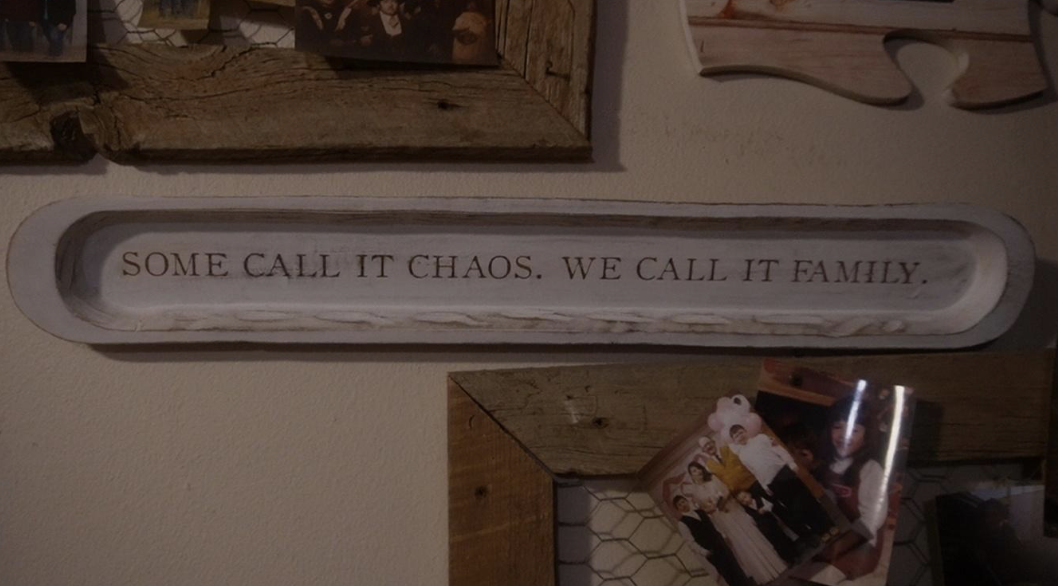
An expression of Jamie and George’s open-hearted values. Photo by Temmy Obajinmi.
Jamie: If you had asked George and I even five or six years ago what our life would look like in five or ten years, it definitely would not have been this. And I say that as a good thing. If I had planned on my own wisdom, and not trusted God, my life would have been something completely different and not what it is today. Our life is just so rich, so incredibly rich. I feel like we are the ones who are blessed. We’re the ones who get all the benefits of Friends of Internationals (FOI) because we get to participate in so many people’s lives and cultures. People say, “You do a lot for us,” but truly, we reap the benefits maybe even more than the students do.
FOI started in 2021. We had planted a church in Laramie in 2020 after leaving a church. We couldn’t really agree with the direction the church was going. We met for about a year, but we kept thinking: we need to do more than just hold services. We wanted to be a church that showed love. We prayed for a long time, trying to figure out what we were supposed to do.
Somebody suggested to us that their church has a group called Friends of Internationals. They said they had held a Thanksgiving dinner and invited several international students, and then told us that, within the US, many students will never set foot in an American home, which was devastating to me. Like, I could not believe people would come to the US to experience America…Yeah, this isn't always the greatest place to live, but you know, people do come here for a reason because we have benefits and experiences you aren't going to get in other places. And I was like, “And they never set foot in an American home. They don't know Americans? Is that because we're closed off? Is it because we don't love, you know, people from other countries? Like, what is this about?” And so we were like, "Okay, we're just going to host a Thanksgiving dinner."
And so we contacted people on campus, and we limited it. It was first going to be like five people, but there was so much response that we finally went, okay, ten people, that's all we can do. We thought we would have it at the home of one of the church members but then ended up renting a facility because it was going to be bigger than we anticipated. We were so nervous about meeting all these international people because we were like, what if they don't eat the same food we eat? What if they don't like this food? So we'd like to make it as friendly as possible for everyone.
We cooked halal, we cooked tofu-forky--the tofu turkey. We made ham, regular turkey, and chicken in case anyone didn't eat any of them. And we made mashed potatoes, but then we also made vegetarian mashed potatoes, like we made so many different dishes (laughing) and did so much work and planning to make sure that for these ten people! We didn't want to offend anybody, and we just had no idea what to expect. We were so nervous.
Well, then George and I got COVID. I came out of quarantine the day before Thanksgiving dinner, so I went, but for like 45 minutes. I was so sick. I went and thought, “I’m just so sick that I can't be here.” I still felt terrible, and George was still under quarantine, so he missed it completely. When it was over, everybody who had participated was like, "This was the most phenomenal event we have ever done. Like, this was so amazing. These people are just so amazing!” We had people from Colombia, Nepal, and Iran…and this is how naive we were. As I remembered, when the responses came in, George said “They let people from Iran come to the US?” He was like, “I didn't even know” because all you see in the news is how terrible Iran is. You don't get to see how wonderful the people are.
When it was over, everybody was like, “We need to hang out with these people again. That was so cool. They're just so amazing, such amazing humans!” So we were like, well, we have a Christmas party coming up, let's invite them to our church Christmas party. It's not a religious party; it's just a gift exchange, and we play some games and have fun. We contacted the people who had come to the Thanksgiving dinner we had, five or seven people responded, I don't remember for sure at this point. I think it was five. And they came to the Christmas party, and we had a great time.
To this day, I remember the event and even remember the ones who were there. We got done with the party, and somebody said “Hey, we need to exchange pictures from the party.” And we're like, “Okay, should we set up a group chat. Do you have international numbers or how does that work?” And they're like, “Let's set up a WhatsApp group.” And George and I, again, like we aren't social media people or anything, like we weren't at that point. And we're like, “What's WhatsApp?” We didn't even know what it was. So, they had to show us where the app was, how to sign up, and how to set it up. And we named it Christmas Party Pictures or something. We set up this WhatsApp group. Then we shared pictures and kept in touch a little here and there. And we were like, that was a lot of fun. We should hang out again.
Then January came and we said, “Let’s go bowling.” Again, five people came. Then we said, “Let’s go sledding.” Seven people came--seven new people we’d never met. Suddenly we were hanging out with twelve people. We realized it was becoming a thing and we needed a name. We remembered the Kansas City church who we’re close to, and Friends of Internationals was actually founded by a guy from Vietnam. We said, “So an international guy gave it the name, so we know it shouldn’t be offensive to anybody.” So we took the name and ran with it. That’s how we came up with Friends of Internationals.
We started planning monthly events: sledding, a mountain day, fireworks on July 4th. And then in the fall there were [football] game days and getting together for potlucks. We had a cultural exchange dinner where everybody got to bring food from their culture and it was a giant potluck, a melting pot of different foods. The year before we had done a Cajun pig roast. And we were coming up to August to do that again. And we were like, “But wait, so many of these people that we have met don't eat pork and these are our friends friends…we don't want to exclude them. So how do we, how do we come up with something that doesn't exclude all these friends that we have made?”
FOI grew to about 40 people that year. So we prayed about it, and the idea came: let’s do a Fusion Feast. Students teach us how to cook their food. The first year we had like 125 people show up. This last August was the fourth year, and we’re close to 325-350 people, which is just crazy to think of.
And it’s kind of evolving. We don’t advertise FOI. It’s just literally people adding people. People don’t even leave FOI. When they graduate they stay in the group, visit, stay part of the family. Last time we counted, FOI represents about 45 countries. Our vision is to give internationals a sense of community, family, value, love, acceptance. And even as it grows, George and I never want to lose the sense of family. It’s disheartening when someone posts in the WhatsApp group and we’re like, “I don’t know that I’ve met that person.” We want to meet that person and know who they are, to spend one-on-one time with you and get to know you as an individual person.
Like there's so many hurdles. To pack it all up and move to another country away from everybody where you really don't know anybody and you're essentially starting over because you don't have anything when you get here. And then on top of that, jumping into your schoolwork and your program, and then on top of that, like I know you learn English before you get here, but you're having to usually speak in another language and learn in another language. And then the programs that you study, I mean, you're brilliant minds!
FOI is always evolving because we never expected it to be this big. It seems to grow 100+ almost every year. I have a sign in my house that describes FOI very well: “Some call it chaos, we call it family.”
Temmy: Thank you so much for sharing this with me. To be honest, you and George are doing a fantastic job. You make international students feel at home with all these events, helping them out whenever there is a need, like moving from one location to another. And also every time there's an event, you provide food, provide everything. You make people feel much, much at home. You give us that sense of belonging. You open your arms to receive us. And that's amazing to be honest with you.
Jamie: Like, not because we're superheroes or because we're the only people that that can help you, but I want people to know that we're willing. We love you and we care about you, and we are going to be there. And you know, true love is unconditional.
Again, I, you know, I said it before: our life is just so rich. It's not like I just have to do all of this, but I just can't imagine living life without it.
Note: The transcript above has been condensed from its original audio recording to improve the flow and readability of the story.
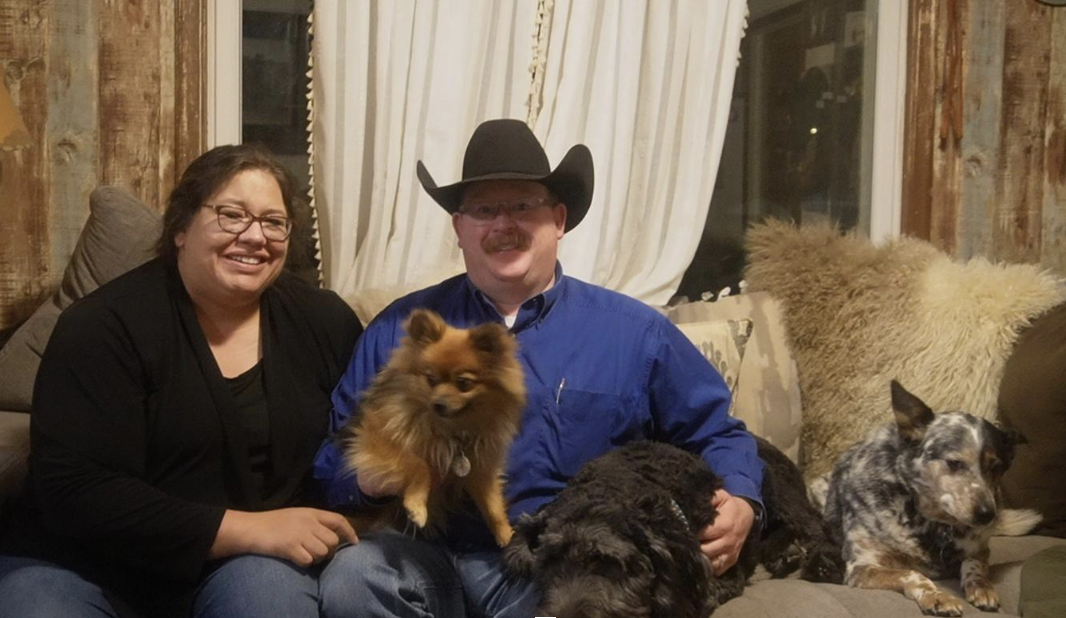
Jamie and George alongside their furry family. Photo by Temmy Obajinmi.