
Bird Stories Bring People Together
Gifted by Trish
Gathered by Jess Ryan
Pinedale, June 2026
Trish reflects on her new role with Audubon Rockies and the Conservation Ranching Program. She describes how birds create a natural connection between conservation work, ranching communities, and people’s personal stories about the land.
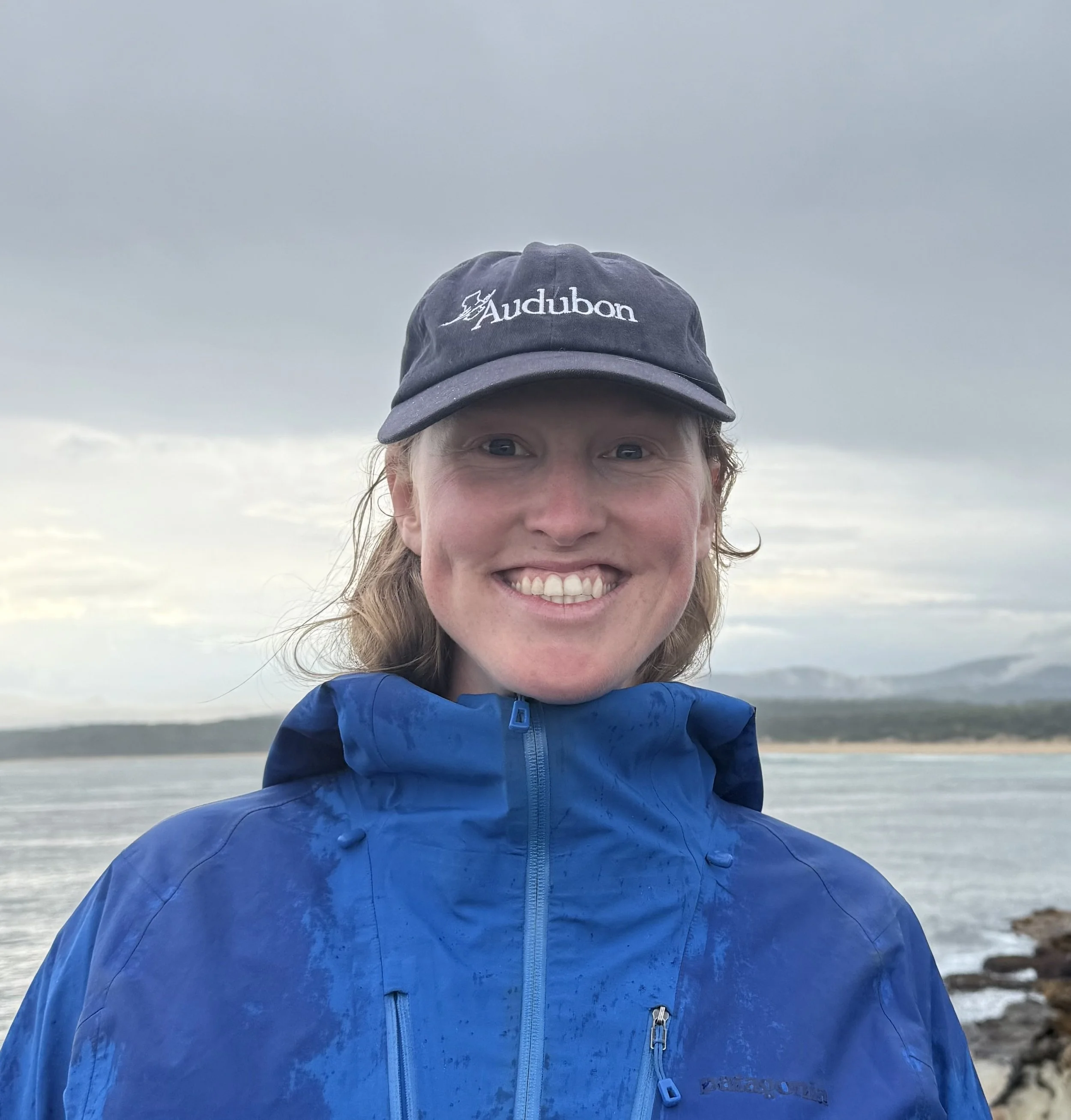
Photo provided by Trish.
Jess: But first and foremost, so I see you're from Audubon. You're part of the Audubon Rockies team.
Trish: Yeah. So I started about seven months ago. Very new. Haven't been in it too long, but before working for Audubon, I was working at Idaho State University. I was doing a lot of kind of seasonal work with nonprofits, with landowners about native restoration. And I was doing a lot of work and research at universities.
But I was wanting to do something with nonprofits that had a regional reach and something that really worked with my community members. And I had a contract end at Idaho State, and the job popped up for Audubon for the Conservation Ranching Program.
Yeah, and it just seemed like a perfect blend of outreach, working with people, kind of education, science, meeting people where they're at to do something that was actually practical and impactful.
Jess: Yeah. That's what I was gonna ask. What is it? Like, what's the heart of it for you? Why do you think that the work you do and the work that Audubon does is so important?
Trish: Yeah. Well, I think birds, of course. Working with... I think it's such a great way to work with private landowners. Specifically, my parents are small business owners, and I think part of it that really drew [me] to [it] is that working with people who are running a business, and you can come in and be like, "Hey, we wanna help you with your birds. We have this program where we can work with you in your business, your operation, in a way that is gonna benefit habitat for conservation but also improve your forage health, help you out, help you connect to the land more."
So I think it's kind of a holistic approach that's really important to me. And I love working with birds 'cause everybody, like ranchers, anyone you talk to, they have a bird story to tell you about. So it's just a good way to connect with people.
Jess: Yeah, I feel like people either love birds, hate birds, have been attacked by a bird.
Trish: Yeah. Or they're like, "Oh, I really don't like seagulls," or they're like, "Oh, ravens," or whatever.
Jess: So I'm curious, thus far, what has been one of your favorite things? I know it's been a short tenure so far, but what's been one of your favorite things about working in the position you're in there?
Trish: Yeah. Wow, there's a lot. I think my coworkers, coming in and it just being people who, they're just your people and they all really are passionate about the work and friendly. That's a big plus.
But I think getting out and doing site visits with ranchers, and they're showing you around this place where they grew up, their grandparents grew up, maybe their great-grandparents, and their favorite thing to do is just show people around.
And so having the opportunity to go on their land and have meaningful conversation with them about how they manage, how they think about things, and just listen more than anything. Yeah, that's just... I never thought I'd be able to get to do that. So yeah.
Jess: And then sort of outside of the Audubon realm, what is something about you? And it could be about the outdoors. It could be just about something, anything.
Trish: Yeah. I didn't grow up in Idaho. I didn't grow up doing things outside. I grew up outside of DC in Maryland and spent a lot of time around concrete. But I would always try and escape to trees and just little patches of nature.
And I just never thought that I would get to live out here and spend a weekend in Wyoming with people just nerding out about everything naturalist, which is... I just love being outside. So yeah, I just feel really lucky to be out here.
Jess: So what was the leap from, "I like being outside and finding green spaces" to it seems like you might have gone to school for this?
Trish: Yeah. Well, I actually went to school for microbiology, 'cause I grew up near NIH and, of course, your parents want you to have a good career. So I never knew what I wanted to do. I was kind of aimlessly like, "I like science. I love kind of the unseen world that explains so much of our environment."
So I dove into that and got to do some research on Yellowstone Lake. I kind of got more into environmental microbiology. And after I went to graduate school, people in the department just needed help, and I was like, "I want to learn." So I helped with stream projects, doing ant surveys, wildfire re-vegetation work, and I think that I was just so open to learning and found myself on this path to ecology.
And the bird piece with Audubon has just been so fun 'cause you get to see birds. It's not like... You know, microbes are awesome, but...
Jess: Right. Have you done the bird banding yet?
Trish: Not yet, no. We went up with our team to Moorcroft. And we were there. And so it was just awesome to be able to have folks that have never touched a bird, seen a bird up close.
Trish: Yes. It can change your mind about things, you know?
Jess: Is there anything else, if you were like, "Oh, if I could say anything about this," or whatever, "I'm inspired," is there anything else that comes to mind?
Trish: I would just say more people should seek out BioBlitzes and come to them. It's like a festival. You can learn a lot. There's awesome people here, and just a good way to interact with your community. So yeah.
Note: The transcript above has been condensed from its original audio recording to improve the flow and readability of the story.