
Off the Highway and Into the Wild:
Bird Banding at the Edge of Wyoming
What the birds are teaching us and the people who have been writing it down for years.
The Journey In
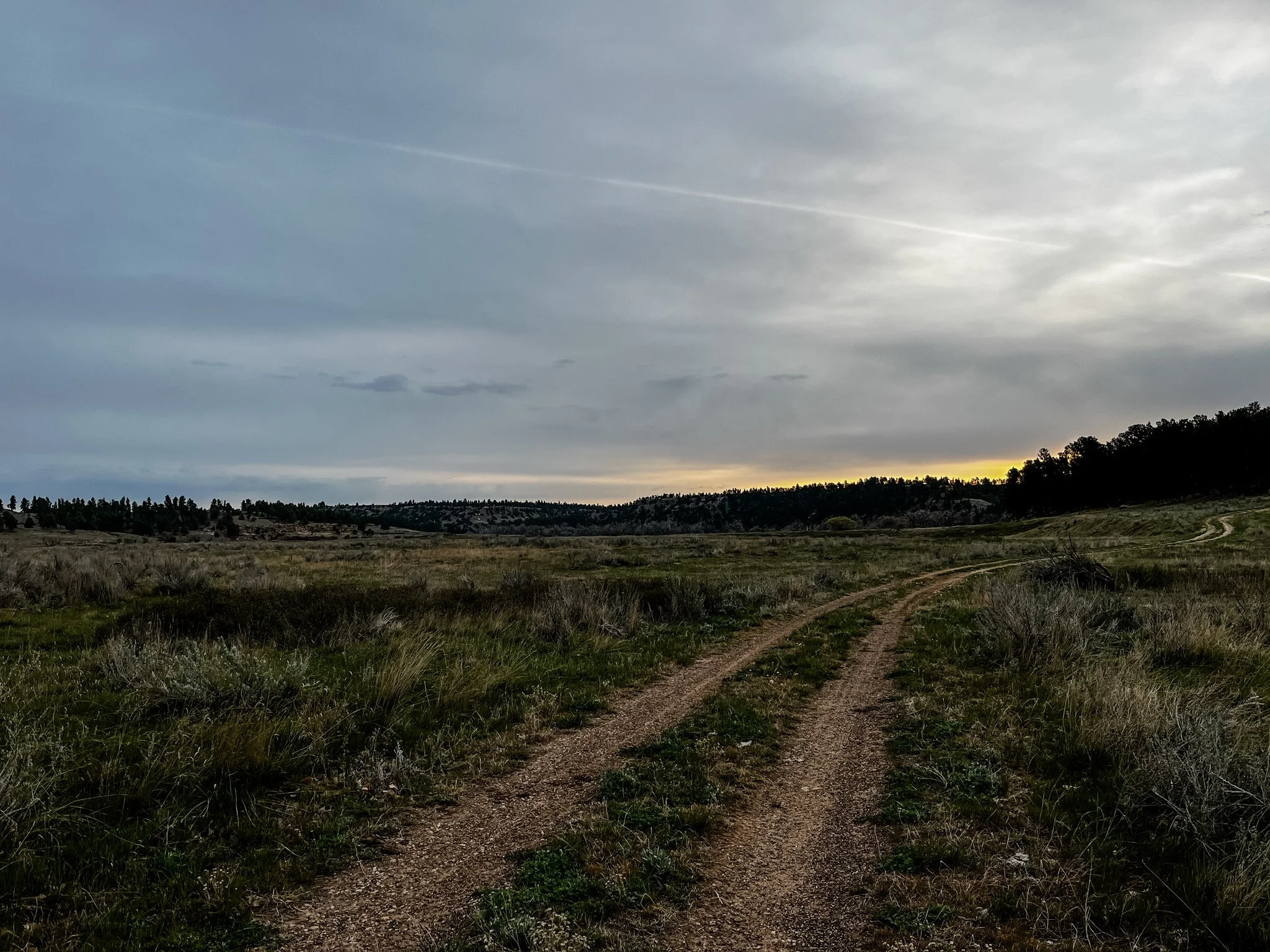
Still dark, the paved world disappeared somewhere back on the highway, swapped for a dirt road and a set of printed directions that no GPS would recognize. "Follow the dirt road, go through a gate and be sure to close it, continue past an old spillway and down the dirt road until you see Little Keyhole, where the road ends at the Belle Fourche. You'll see us there under a big cottonwood tree."
Those are the kind of directions that require a little faith. Two cars worth of people pulled up the directions from their email and turned onto the two-track before full sunrise.
Hawks. A heron. A group of tom turkeys, next, in full display on the edge of the road: tail feathers fanned out, chests puffed up, completely unbothered by the cars that had slowed to watch. They were not moving. We waited. They strutted. Eventually they decided we weren't worth their time and ambled off into the grass.
Then the gate. Squeaky, loud, rusty; quite possibly announcing arrivals half a mile away. Someone hopped out, swung it wide with a high-pitched squeal, waved both cars through, wrestled the latch closed, and jogged back. It's a small thing. It's also just how you do it out here.
A two-track delivered participants the rest of the way–geese in a V almost pointing the direction. And at the end of the road, under the big cottonwood tree, a cacophony of birdsong well underway.
“Just over 200 years ago, scientists still didn’t know how birds migrated. They thought they flew to the moon. They thought they burrowed in the mud. It was bird banding that solved it.”
“Right now is a really fun time for us. All the data is coming together. We can make pretty good inferences on what the birds are doing, which species are here now that hadn’t been previously, which ones are no longer using this habitat.”
Meet Jacelyn & Dusty
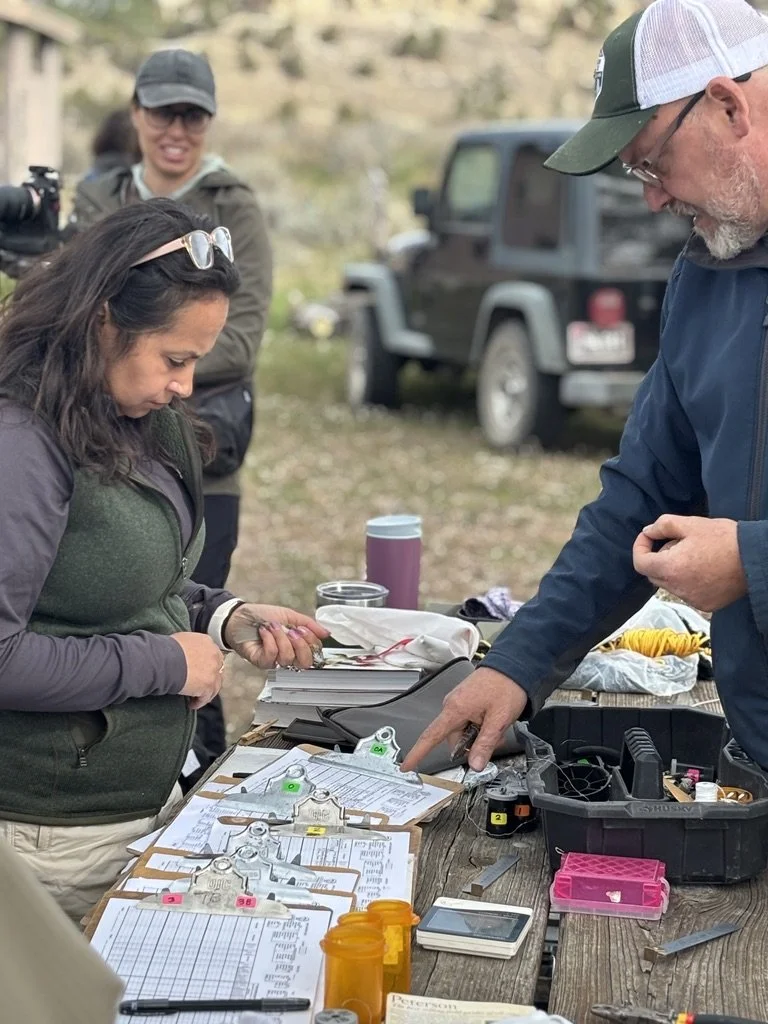
In 2007, Jacelyn Downey started this bird banding station in a secluded area of Keyhole State Park that abuts her and her in-laws' ranch land. She and her husband Dusty have been working alongside each other since they started with Audubon in 2005…long enough to watch their daughters grow up alongside the data. Jacelyn strapped her oldest into a baby carrier and brought her out when she was just two weeks old. Now that daughter is 19 and still comes back.
The records from this station are old enough now to tell real stories: species that have disappeared from the nets, new ones showing up for the first time, shifts in range and abundance that would be invisible without 18 years of numbers behind them.
The Community
The people who show up for a 6am banding session at Keyhole State Park are a random crowd of demographics, histories, and experiences, but not-at-all random when it comes to curiosity, the outdoors, and love of the outdoors. Gloria and her husband are both retired wildlife biologists, former Wyoming Game and Fish, who have banded ducks from Wyoming to New Jersey to Canada. Claudia came from just north of Fort Collins with her husband Phil, a photographer, pulled in by a neighbor who happens to be the director of Rocky Mountain Audubon. Darlene drove in from Gillette after a tip from a Game and Fish contact. Different roads, same gate.
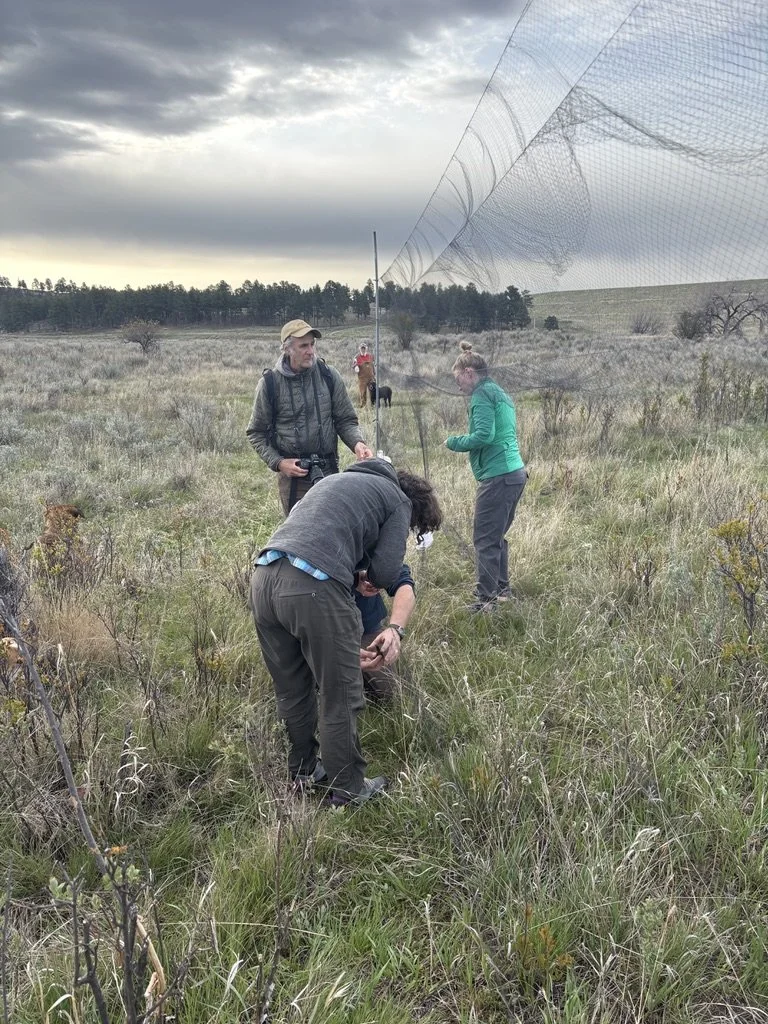
“It’s a whole lifetime of learning. It makes you feel like a kid.”
“We both just said it was a great experience. We’ll probably come back.”
“I was a little nervous about the birds at first. But I’m learning lots and having fun.”
The Banding
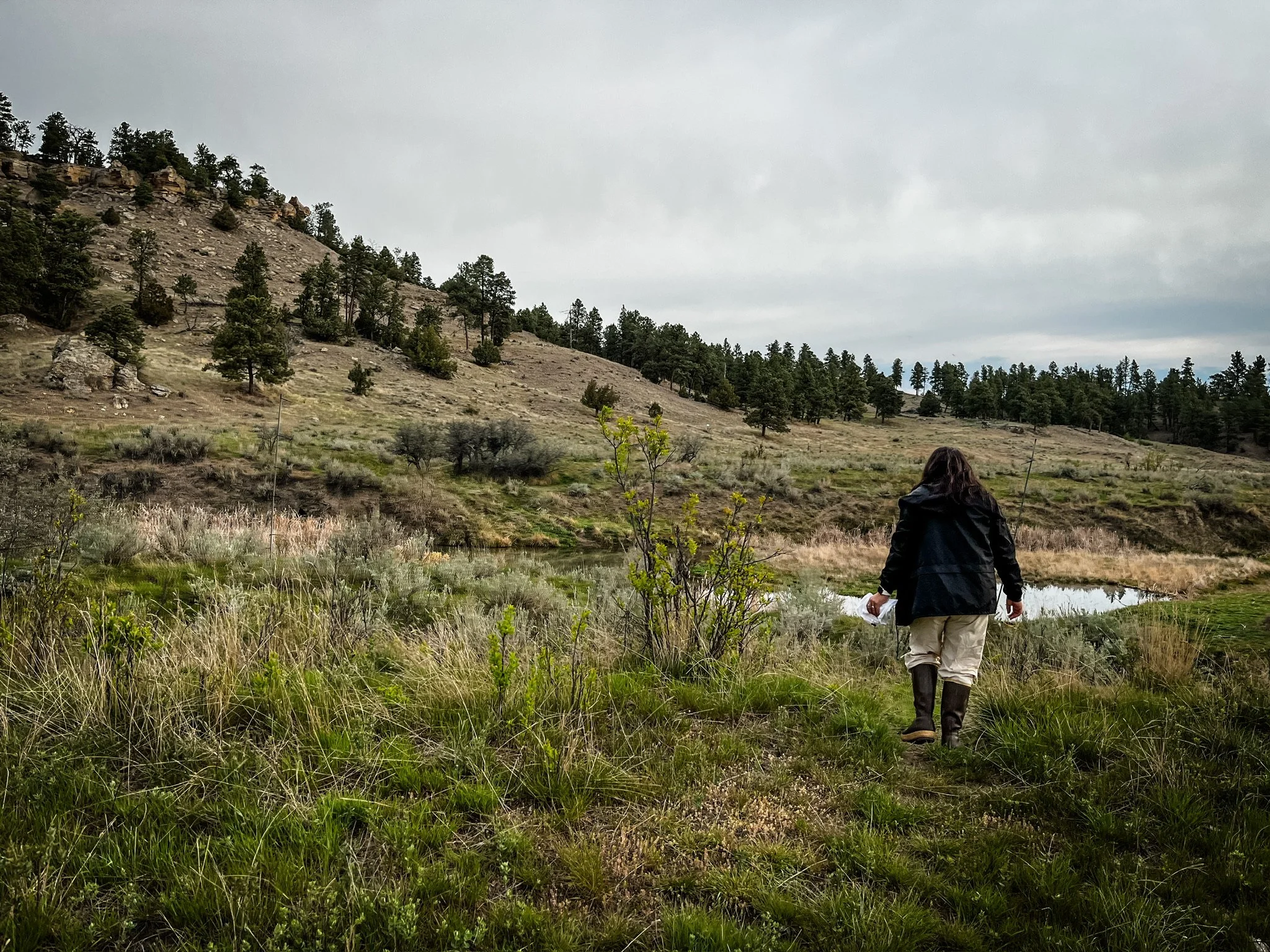
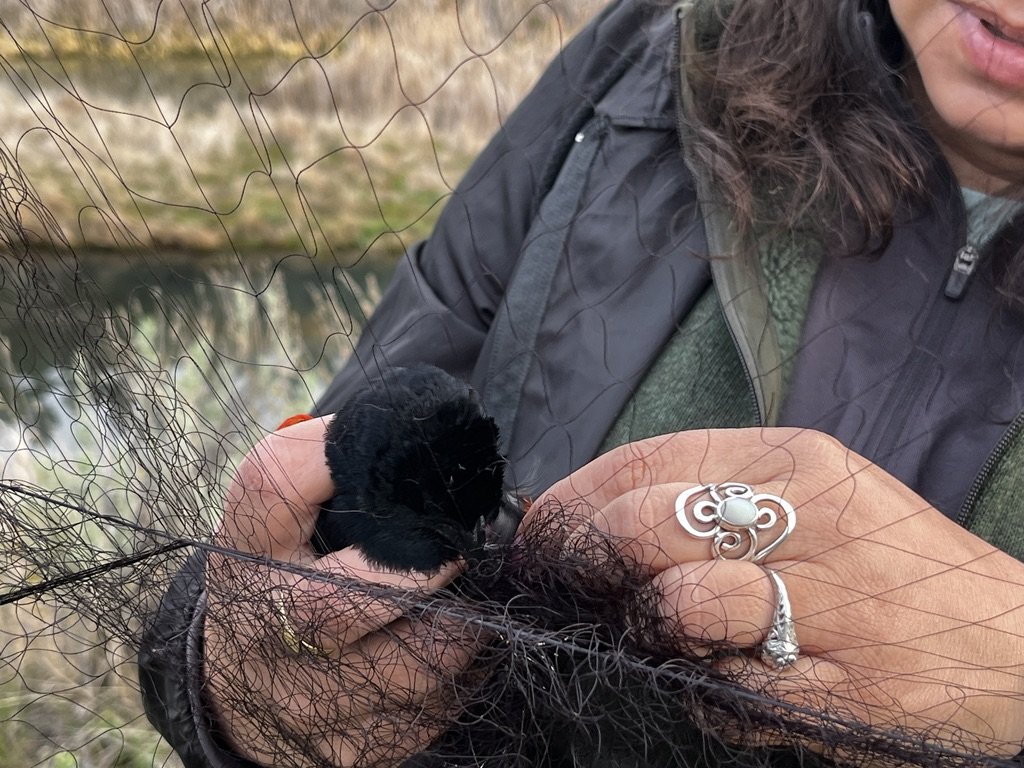
The mist nets–not unlike large badminton nets, nearly invisible–go up before first light. They're strung between poles in deliberate locations: one near the riparian edge where the willows thicken, another along the shrubby transition zone where grassland meets cottonwood. Each spot is chosen because different species use different edges and environments. The fine black mesh catches the early morning light only if you're looking for it...or if it gets too windy, a common problem in Wyoming.
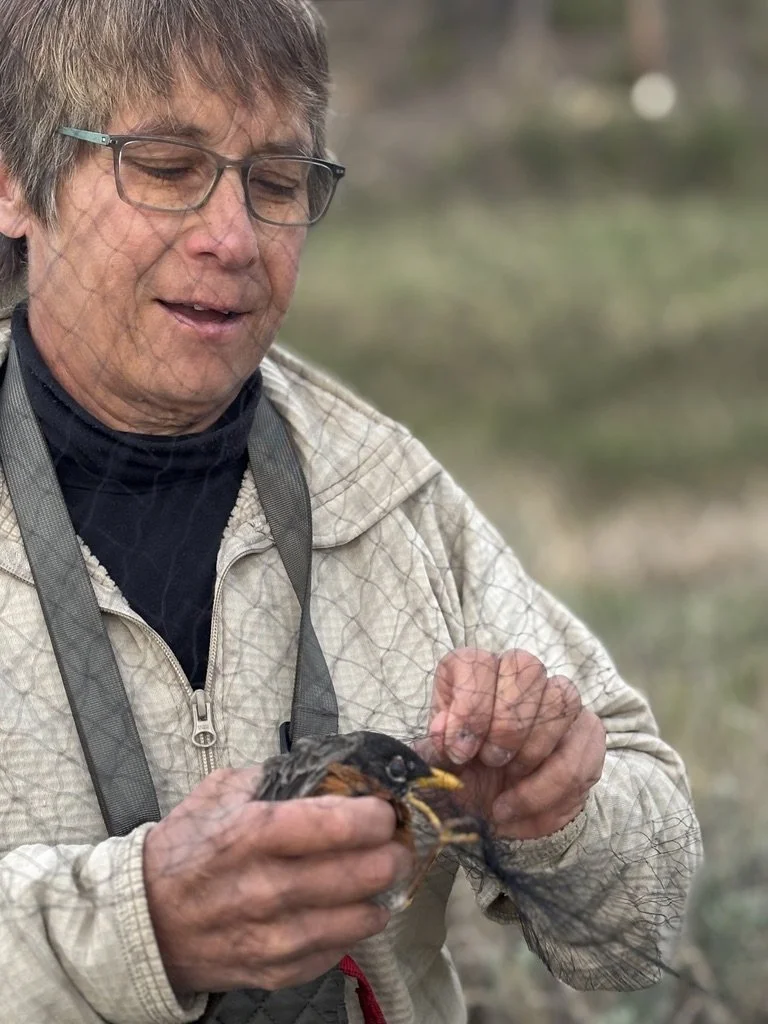
Every thirty minutes, people break into groups and walk the paths of the ten different nets. When a bird has come in, you can often hear it before you see it; a soft flutter, a small panicked rustling. The extraction takes patience. The bird is worked free gently and methodically: little feet unclenched, then tail feathers, a wing untangled, the body eased backward out of the mesh. Watching Jacelyn, with her years of experience, it takes less than a minute. Others newer to the process can be there for what feels like forever…maybe fifteen minutes per bird.
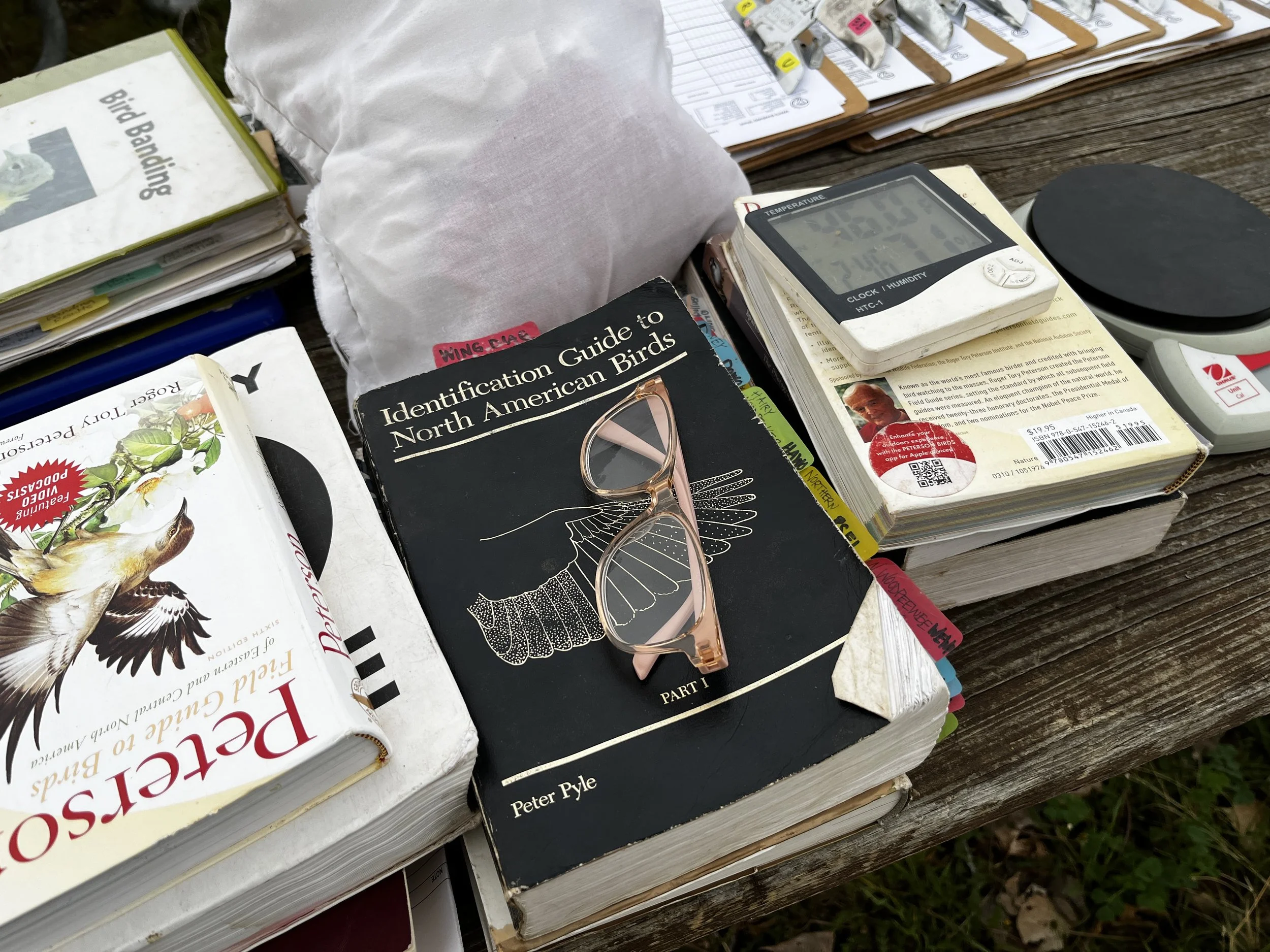
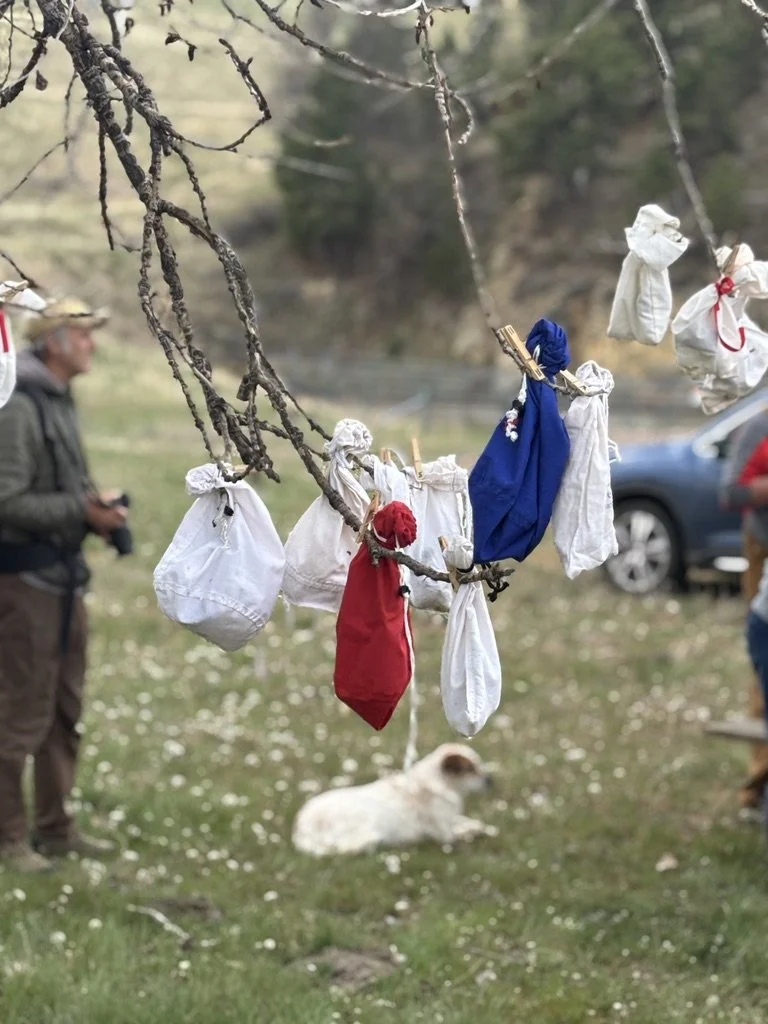
The bird then goes into a small cotton bag with a drawstring, which has a calming effect that is almost immediate for most birds. It's carried back to the banding station and clipped onto the limbs of nearby trees, making the cottonwoods look like holiday trees hung with soft, rustling ornaments.
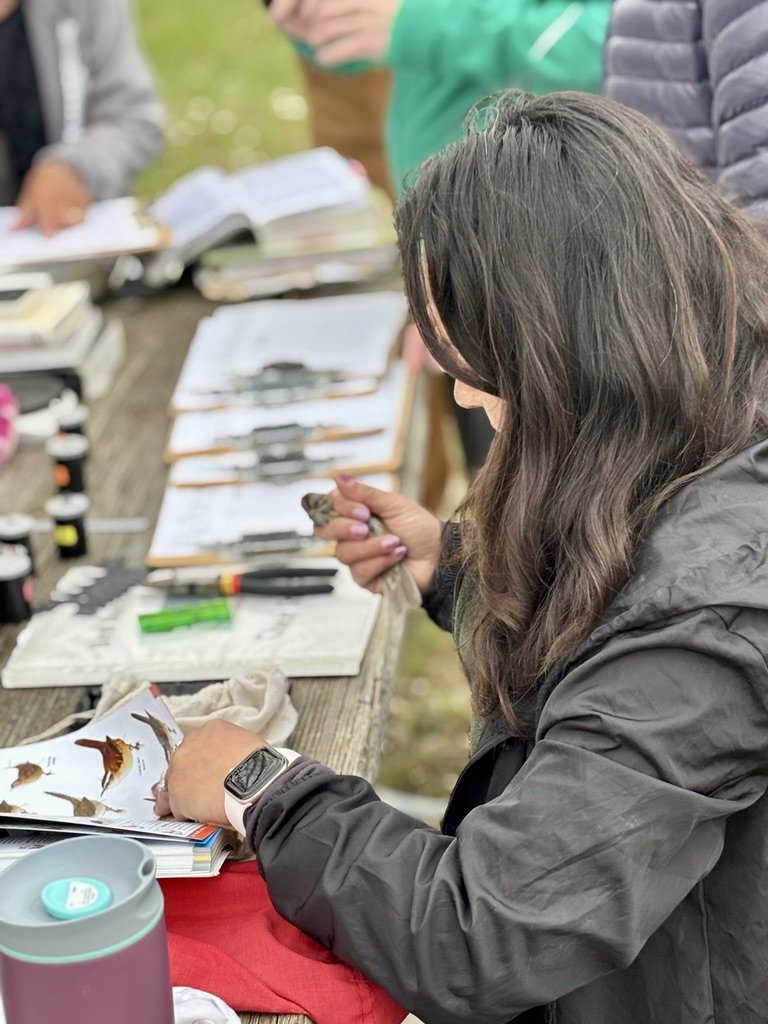
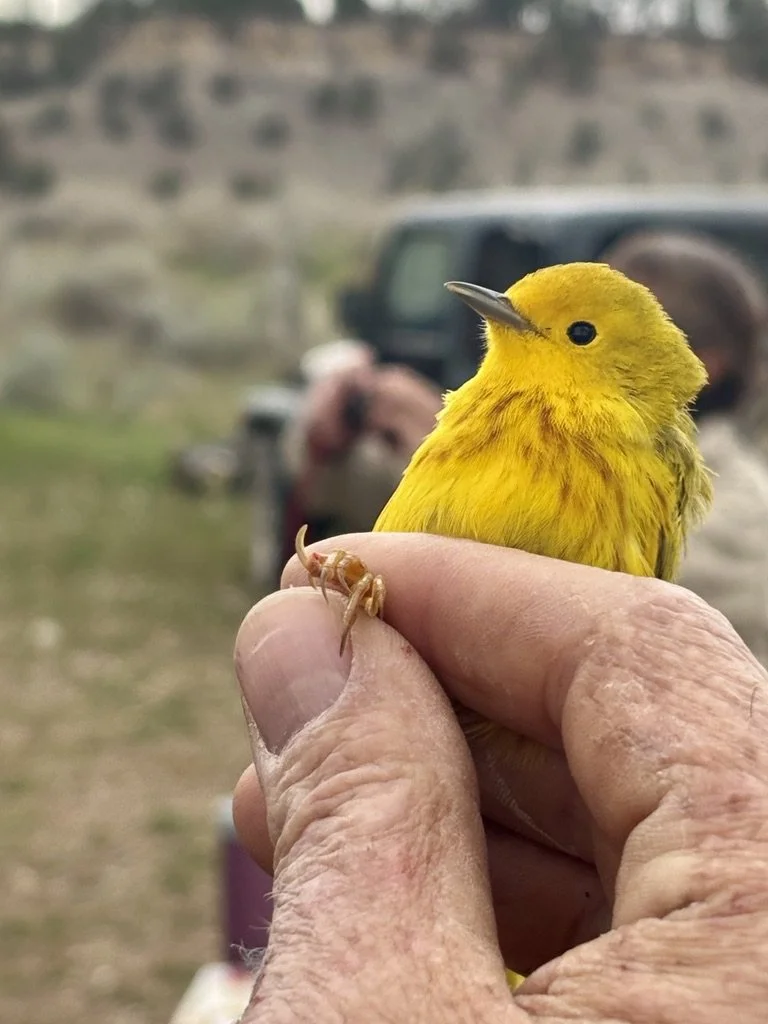
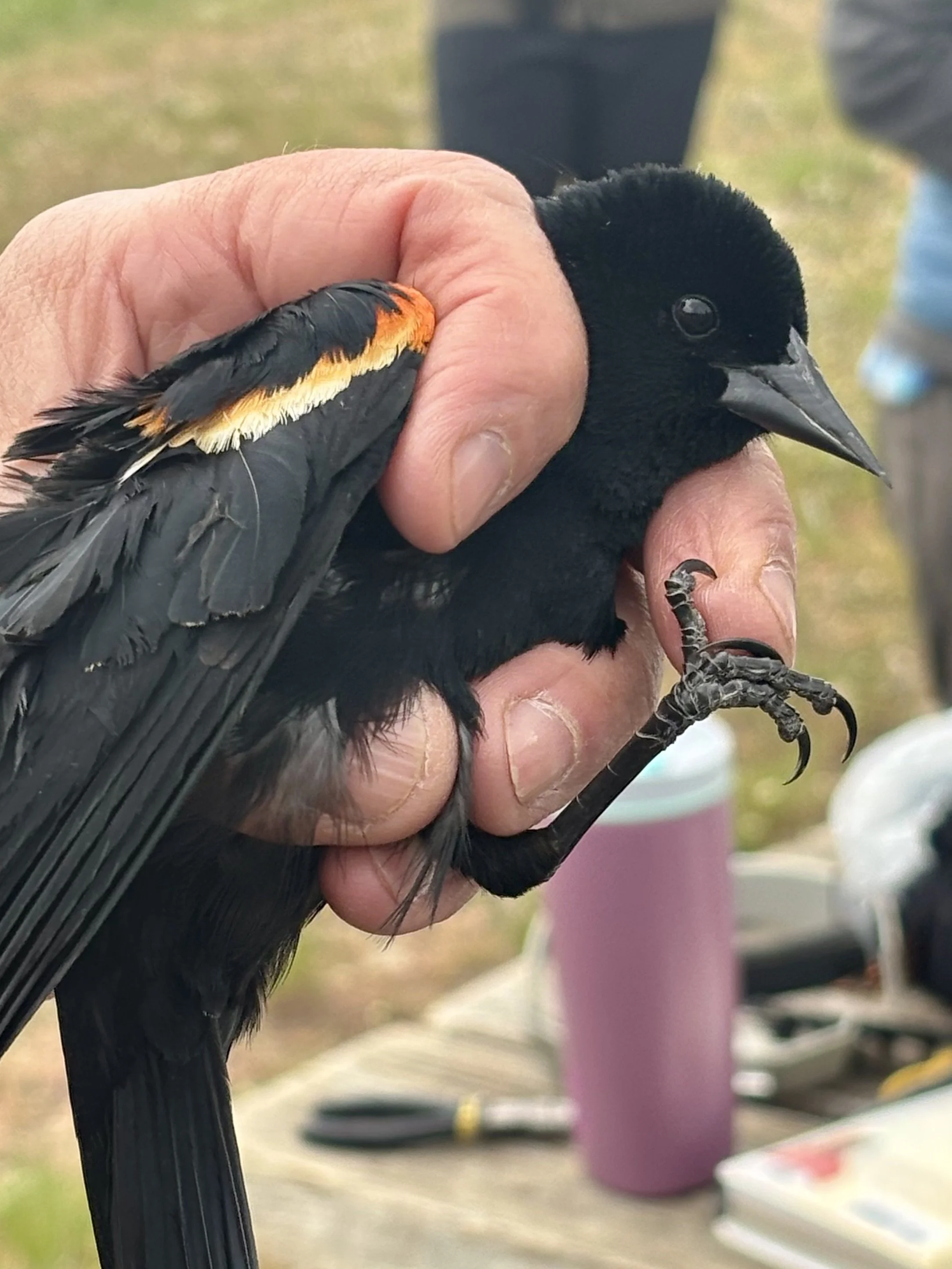
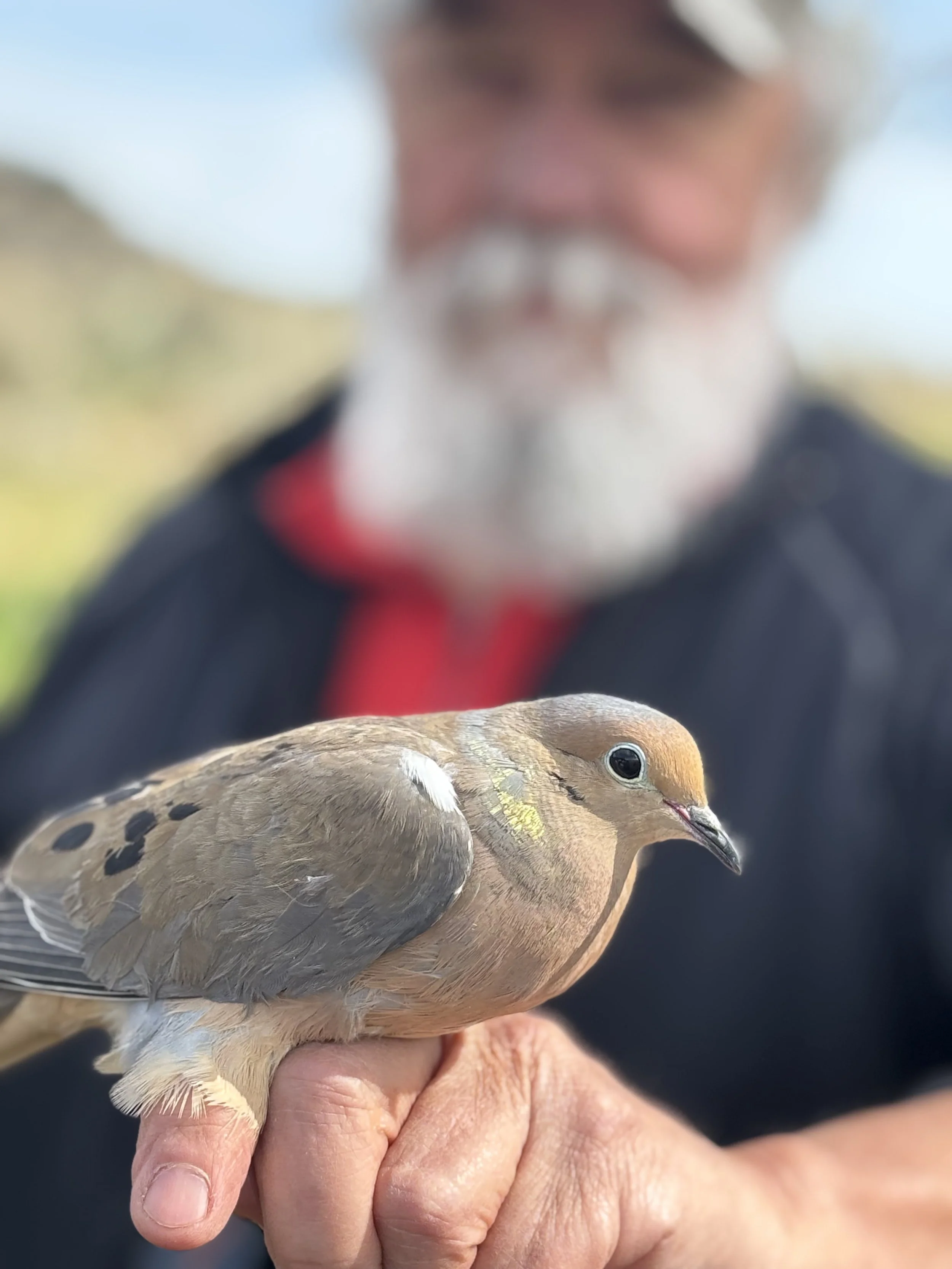
At the table, things move quickly and quietly. The bander slips the bird out of the bag in the "bander's grip"; the bird's head between two fingers, its back resting in the palm of the hand. Secure, but never tight. Now the work begins.
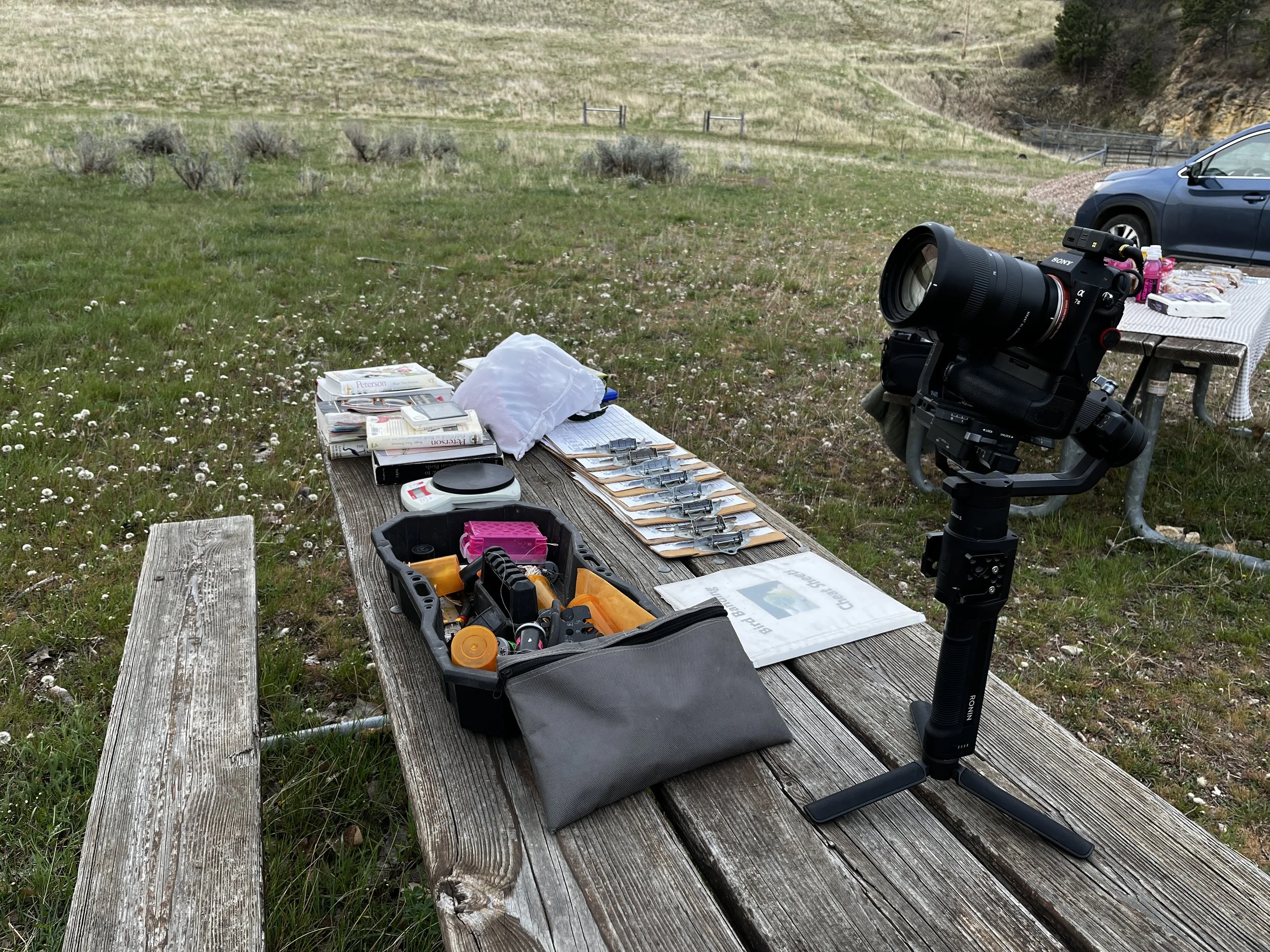
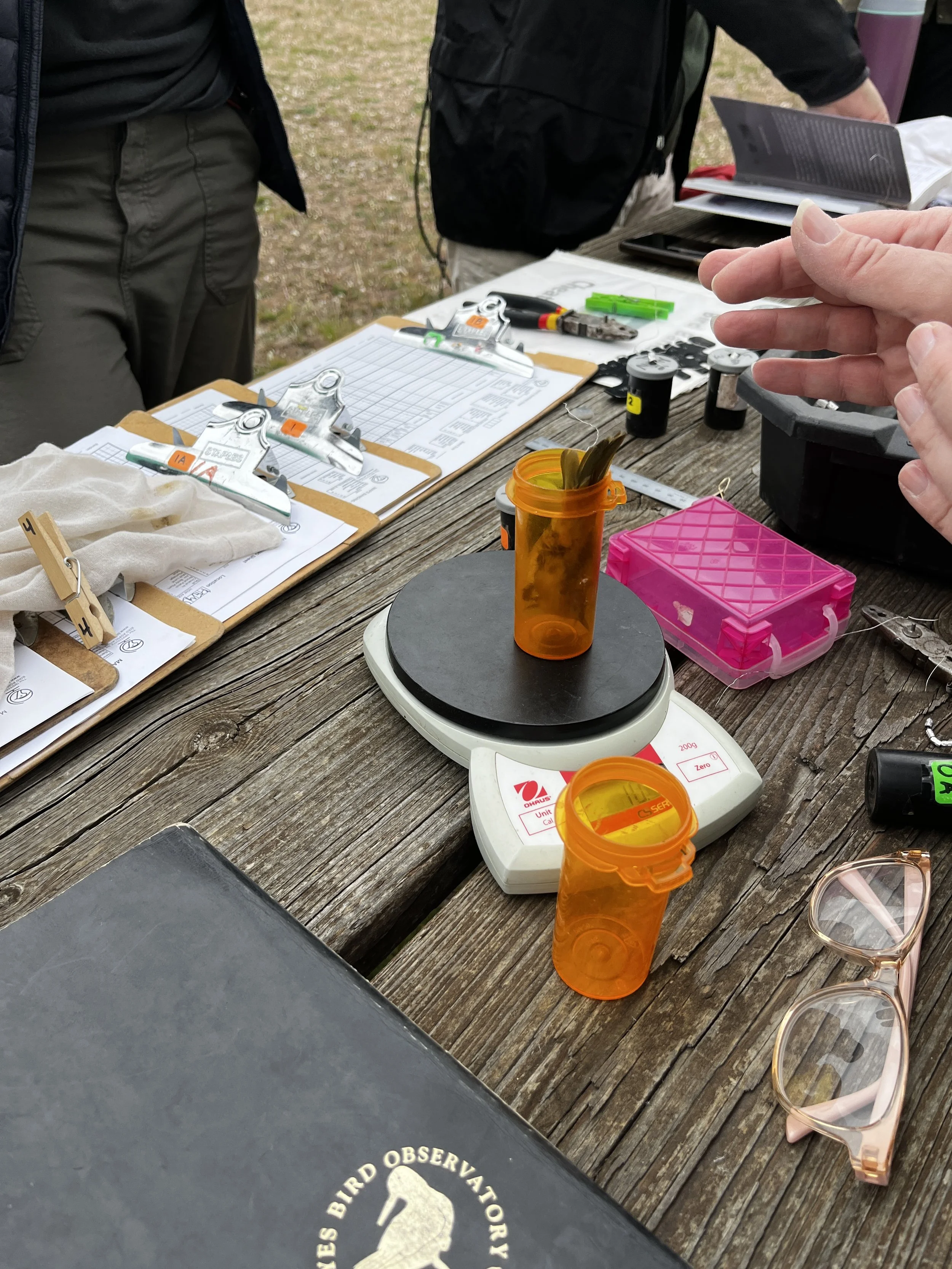
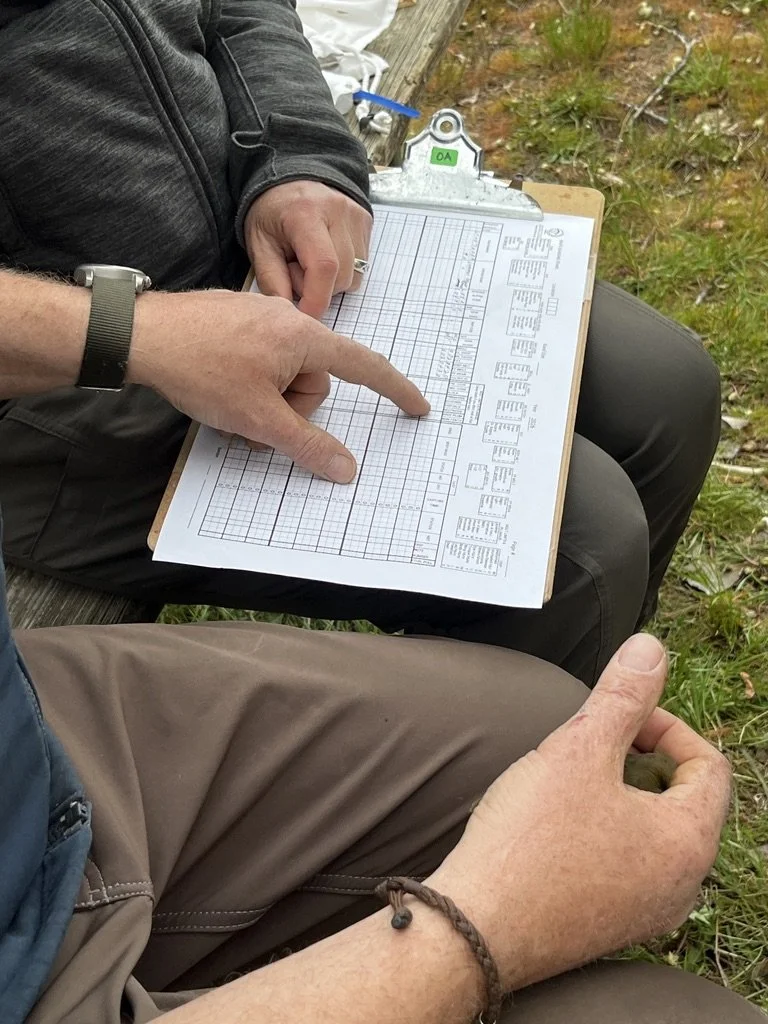
Species called out first, that usually determines the band size. A tiny aluminum ring, stamped with a unique number registered to the federal Bird Banding Laboratory, crimped onto one leg just snug enough that it won't slip, loose enough that it spins freely. The number read aloud, written down, entered into a dataset that connects this bird, this morning, this stretch of Wyoming two-track to a continental network of stations going back decades.
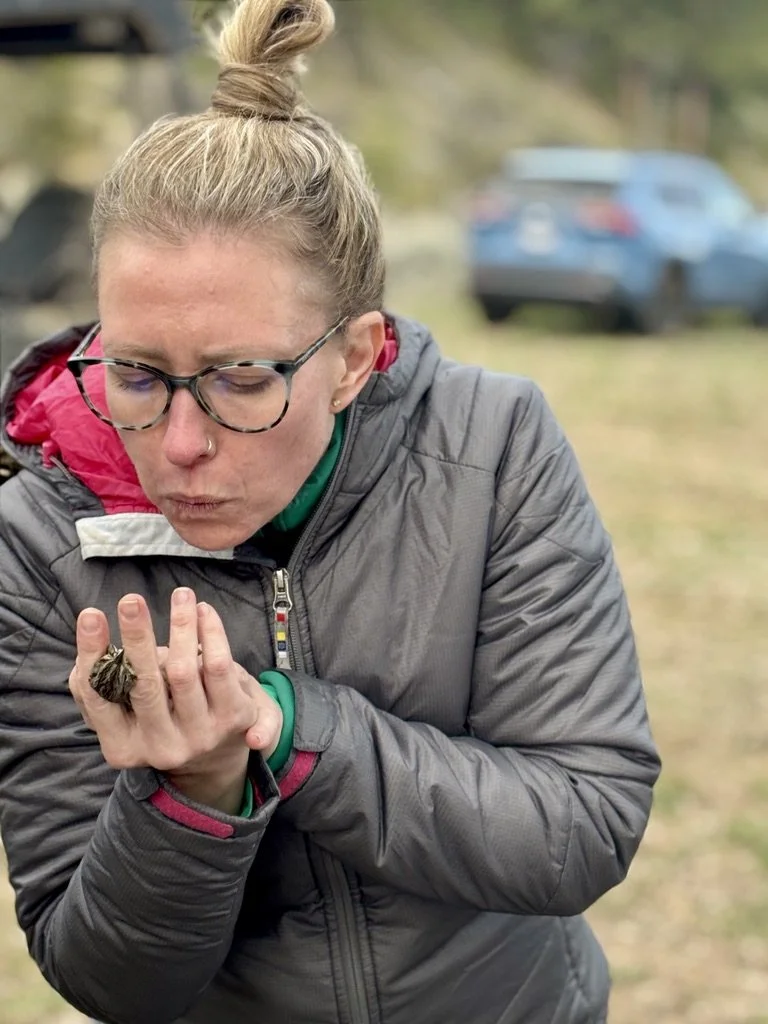
Then age. Sex. Feather condition, a score that indicates how far this bird has traveled and how recently. A quick blow on the belly can reveal the brood patch: bare skin where a bird sits on eggs to incubate them, a quiet signal of its health and breeding status. Weight last, the bird is slipped headfirst into a small tube on a scale, grams to one decimal, a number that speaks to fat reserves and abundance or famine along the route.
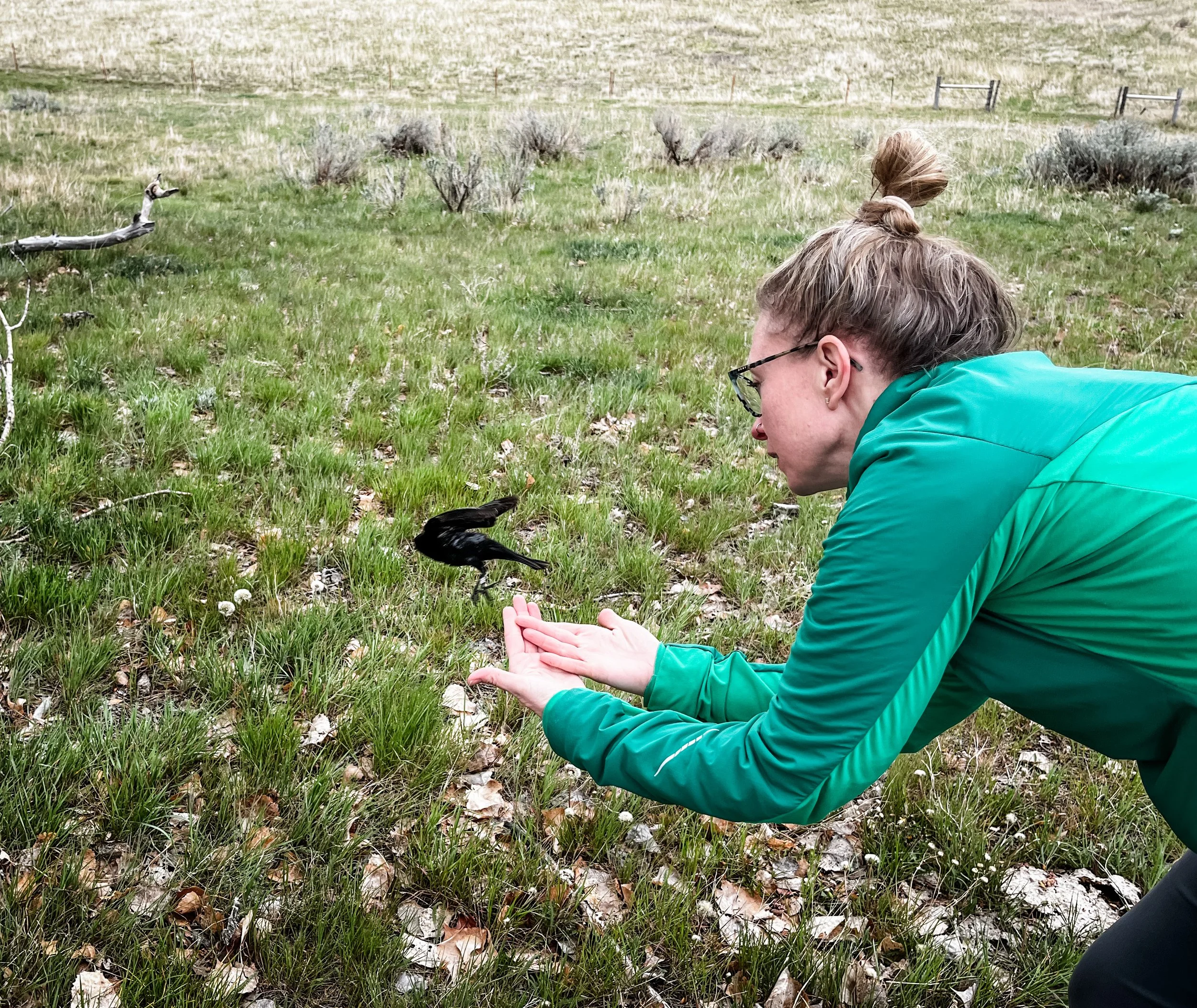
Then the release. The bander opens their hands and the bird either sits for a half-second, taking stock, deciding… or it's gone before the hand is fully open. A yellow warbler becoming a yellow blur. A song sparrow dropping into the willows like it was never there at all.
When you hold a bird in your hand, something shifts. It's what every person here says, unprompted, in their own words. Claudia admitted it was a little "nerve-wracking," making sure she didn't hurt one. Even Jacelyn mentioned a schoolteacher from Moorcroft who was afraid of birds until she held one. As Dusty put it: "Maybe they've been birders their whole lives–seen these birds through binoculars, seen them at feeders. But to actually be here, hold a bird in your hand, let it go, and collect really important scientific data... you can see the fun along with the reward."
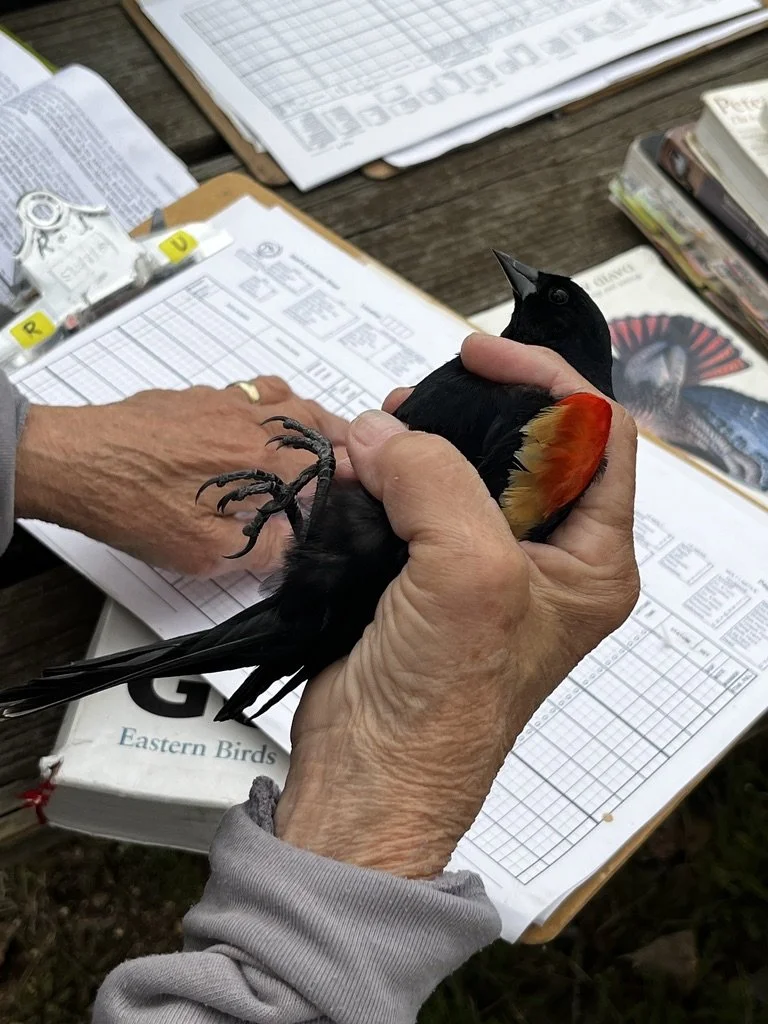
“When they hold a bird in their hand, it’s very exciting for them. Their enthusiasm is really contagious.”
Why it Matters
The phrase canary in the coal mine has been used so many times it's almost lost its weight. Jacelyn Downey uses it anyway, and means it in the most literal sense: birds are the first signal. Where they're thriving, something is right. Where they disappear, something has gone wrong… with the water, the soil, the green space, the insects nobody was tracking until the birds that ate them stopped showing up.
This station has been running long enough to catch those shifts. Common yellowthroats absent from the nets for years, then suddenly back this season. Bullock's orioles slowly giving way to orchard orioles, a shift playing out one banding season at a time. A yellow-billed cuckoo captured once near the riparian edge, never seen here again. One data point. It’s enough to know that something passed through. Not quite enough to know why.
This is what citizen science is: the unglamorous, disciplined act of showing up year after year, observing, connecting, and writing things down. Dusty and Jacelyn have done that for almost 20 years. The people who drove hours to be here today are part of that act now too. Their morning is in the dataset.
The tapestry of the land and the people haven’t unfolded in a single season or a single story. They’ve been creating a narrative shaped by the accumulation of people being present with who and what is around them: ranchers and scientists, citizens and crews, bouncing down a two-track at sunrise, all of them watching the same sky.
The Closing
By the time the sun was high enough to feel and the late morning wind kicked up, the nets had come down. The data sheets were folded, the bands logged, the cloth bags shaken out and packed away. The Re-Storying the West crew loaded back into the trucks, the same dirt road out that had brought us in, the squeaky gate, the turkeys' territory, the cottonwoods thinning behind us until it was just open country and the highway ahead.
It's easy to wonder, driving away from something like this, whether it amounts to much. Whether a couple dozen people in a field outside Moorcroft, counting warblers and writing down wing lengths, can matter against the scale of what's changing in the world. But Dusty Downey had an answer for that.
He also told a story about his parents, his father 83, his mother 78, ranchers who have worked this land their whole lives. They still come to the banding station. And they still, occasionally, see a bird they have never seen before in eight decades of living here. That moment–of a lifelong rancher leaning in to look at something small and unfamiliar in a child's hands–might be the quietest and most honest version of why human stories matter. Not to convert anyone. Not to explain the land to people who already love it. Just to share with them one more thing it holds.
Somewhere out there, a bird with a tiny aluminum band on its leg is going about its life; crossing a state line, following a food source south, returning in spring to a willow thicket on a Wyoming ranch it has decided is home for a season. It doesn't know it's in a database. It doesn't know that a retired wool mill worker from Buffalo, a first-timer from Gillette, and a photographer from Fort Collins all held birds like it this morning, and felt something shift.
But Dusty and Jacelyn know. They've been writing it down for almost twenty years.
“If you can get 25 people to a conservation event like bird banding in Wyoming, that’s huge. Most Wyomingites would surprise you with how conservationally-minded they are. It’s very deep in their roots. Very deep in all of our hearts.”
Call to Action Want to join the next bird banding event in Wyoming?
Connect with Audubon Rockies: audubon.org/rockies/get-involved/bird-banding-wyoming
Learn more about Audubon Rockies programs: audubon.org/rockies
All quotes sourced from recorded interviews conducted on-site, Moorcroft, WY, May 2026. Transcripts on file.
Jacelyn Downey - Community Naturalist Program Director, Audubon Rockies
Dusty Downey - Conservation Ranching Director, Audubon Rockies
Claudia Benstein - Volunteer, Fort Collins, CO
Gloria Rogers- Volunteer / Retired Wildlife Biologist, Buffalo, WY
Darlene Erickson- Volunteer, Gillette, WY
Photos by Jess Ryan, Nancy Small and Misty Springer
Video by Shelby Hutson