
Grass, Grit, and Grazing
Gifted by Bob Christensen
Gathered by Nancy Small
Gillette, May 2026
Bob, a fourth-generation Wyoming rancher, explains why he runs cattle and sheep together on the same land making it more productive and healthier for the pasture than either species could do alone. He closes with a nod to Wyoming’s character and environment.
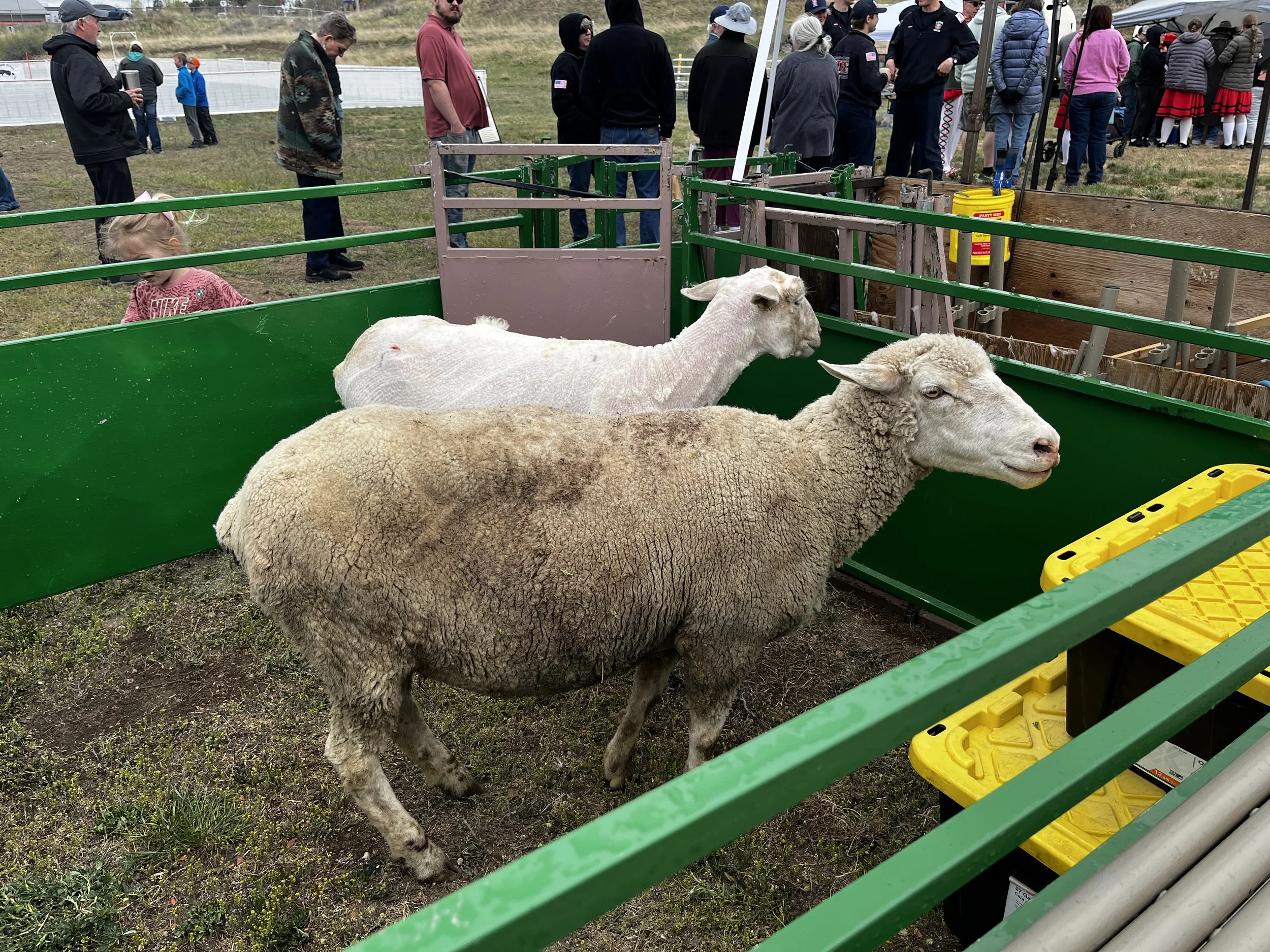
Photo by Nancy Small
Nancy: How long have you been a rancher, and how long has that included sheep?
Bob: Well, I'm 72 years old and I've been there my whole life. My grandfather homestead there in 1904.
Nancy: As a cattle ranch also?
Bob: Mainly cattle. Mainly. It started with sheep clear back in the early, early days. And then it switched to all cattle, uh, probably in the war times and then we got the sheep back in the early '60s and we've had sheep again ever since.
Nancy: I know a little bit about cattle ranching, but, how is it different working with cattle versus sheep? Or is it different?
Bob: They're both prairie animals... We raise grass first. We turn that grass, we put cattle or sheep out on that as a commodity that we can market so we can stay in business. That’s our masterful use of the grass. Um, sheep graze, they browse.
They're kind of like deer and antelopes and the cow grazes. And so if you can run both of them together, you do better. And so that's why I kind of stayed with them as much as I can.
Nancy: So it's better for the land?
Bob: It's better for the land and, and it's more productive. . We can take a bunch of cows out of a pasture when they're hungry. They mowed it down.
You can put a bunch of sheep in there and do fine because they eat the other stuff. They eat the bushes, and they eat the plants, and eat the small stuff like this. They got this new holistic grazing they talk about. And you go in and you just mob graze it, and it's supposed to be better for the land and then you leave it alone for a while.
But when you run cattle and sheep together, you get kind of a little bit of a sampling of that just naturally because they eat all the different stuff.
Nancy: It's making me think about how, I know that like, that wildfire, while it can be very destructive, it also has its benefits.
Bob: There's two sides to that. That's exactly right.
Nancy: So, so is the kind of dual grazing, um, and browsing you're doing, is that along the same kind of lines? Like it, helps keep grasslands healthier in similar kinds of ways?
Bob: It helps them keep... Yes, right. It keeps them healthier. I think it's better for... I had a guy that worked for me who was two years behind me in university, and he came to work for me for years.
And he told me, "I think the pasture's better where we have both cut them." And I hadn't been paying too much attention. Mm-hmm. I was just busy trying to get everything done, you know? So I started watching after that, and I think he's absolutely right. I think it does better.
Nancy: That's interesting that you came upon it through other reasons why you had this mixed kind of grazing- Yeah ... but that it ended up being better for the land.
Bob: I have. We have cows and we have sheep now. The experts, the BLM, the Forest Service people all tell you it's a five to one ratio.
You can run five sheep to every one cow. But if I sold all my sheep and turned those sheep into cows, I couldn't run them all on the place. So if I keep them like this I can run more, I can get more out of my land. I got my fixed costs or my asset there. I can get more out of my asset if I run it that way too. Yeah. So that's what I try to do.
Nancy: So my last question for you, since you've been generous with your sharing about your ranch, so you're multi-generation in this county. What do you think is special about the county or about Gillette or about Wyoming? What would you want people that don't live here to know about the place that you live?
Bob: Well, there's a bumper sticker says, "Wyoming's what the rest of the country used to be" and there's a lot of truth in that. If you go to Arizona, you sweat your butt off in the summers. If you go to North Dakota, you're so goddang cold and windy you can't stand it. All in all, we have a pretty dang good environment here. All in all, it's not a bad place to be.
Nancy: Not a bad place to be.
Bob: Not bad at all.
Note: This was recorded live at the Sheepherder’s Festival in Gillette, WY and includes background noise.
The transcript above has been condensed from its original audio recording to improve the flow and readability of the story.